Magne Motion Logo
Home  |  Contact Us  |  Sitemap 
LSM Overview
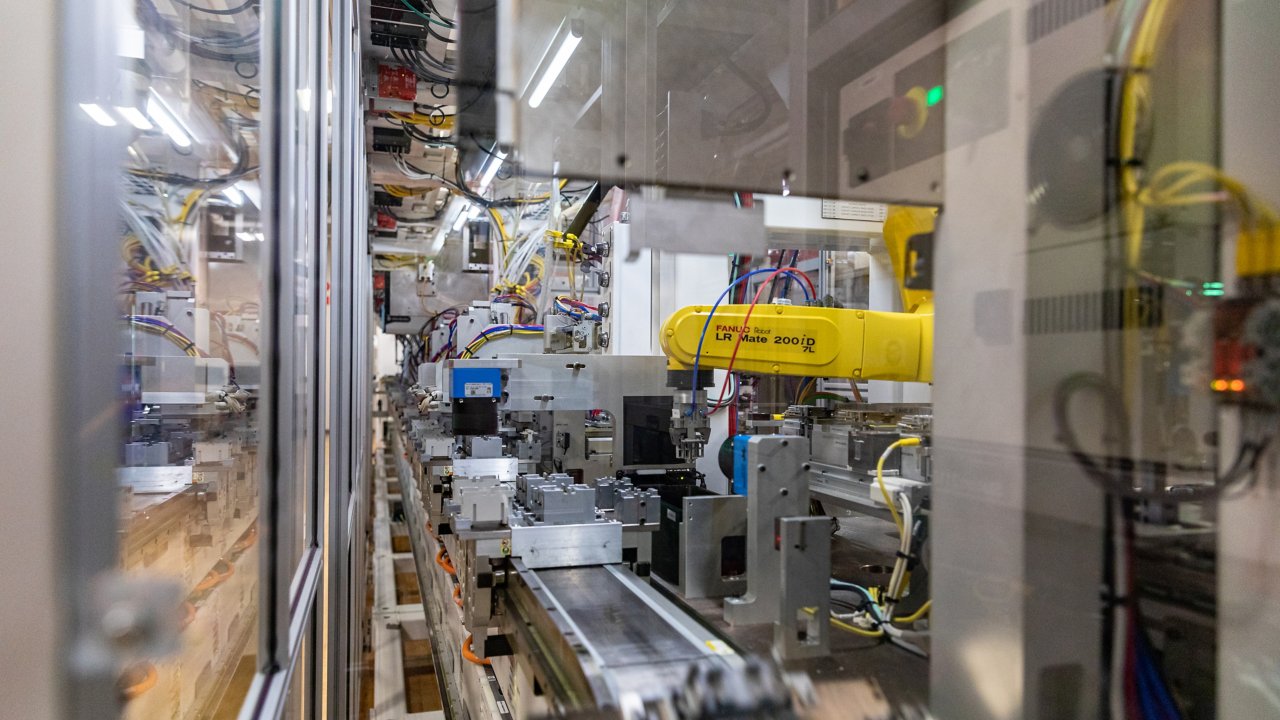
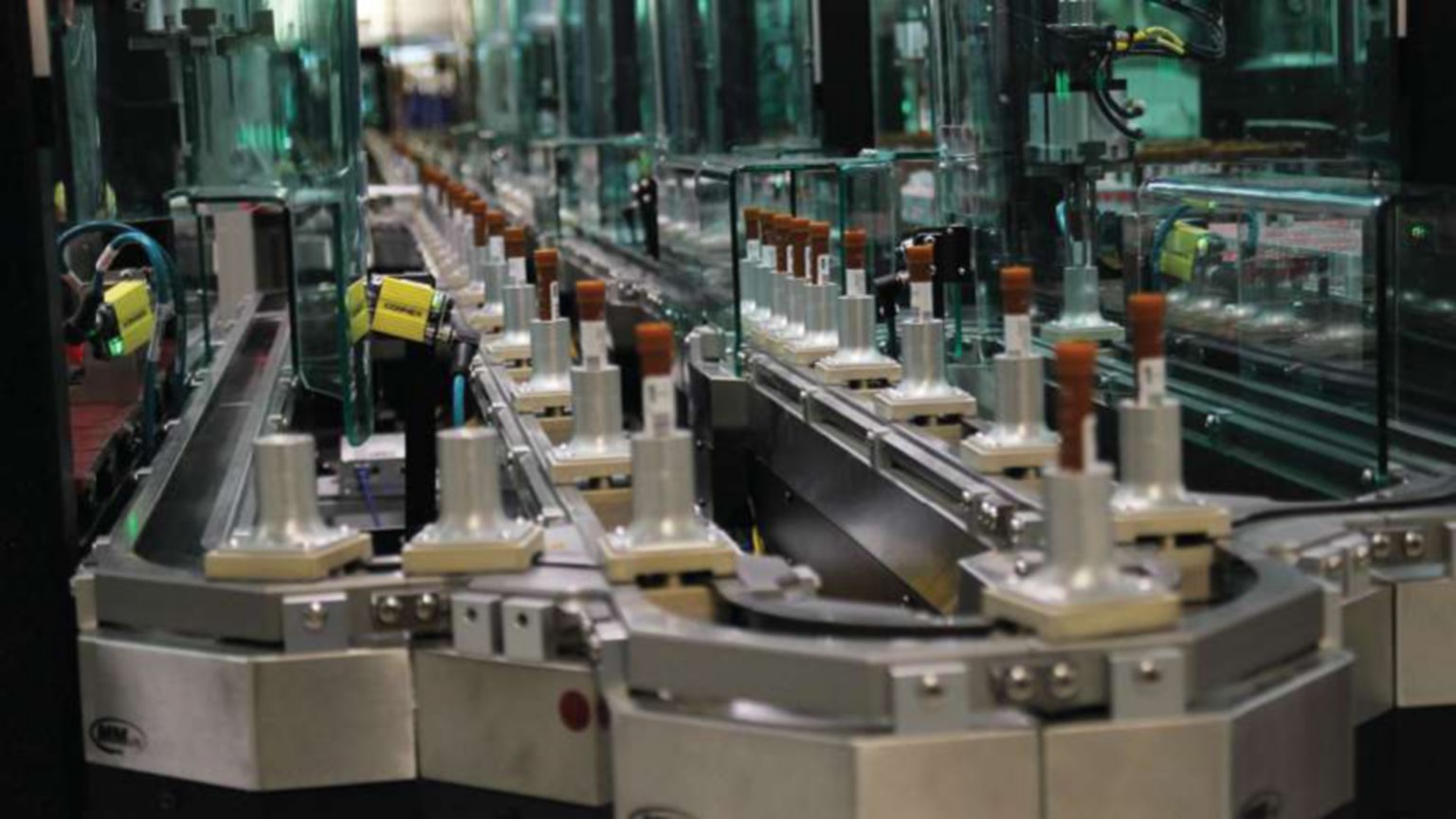
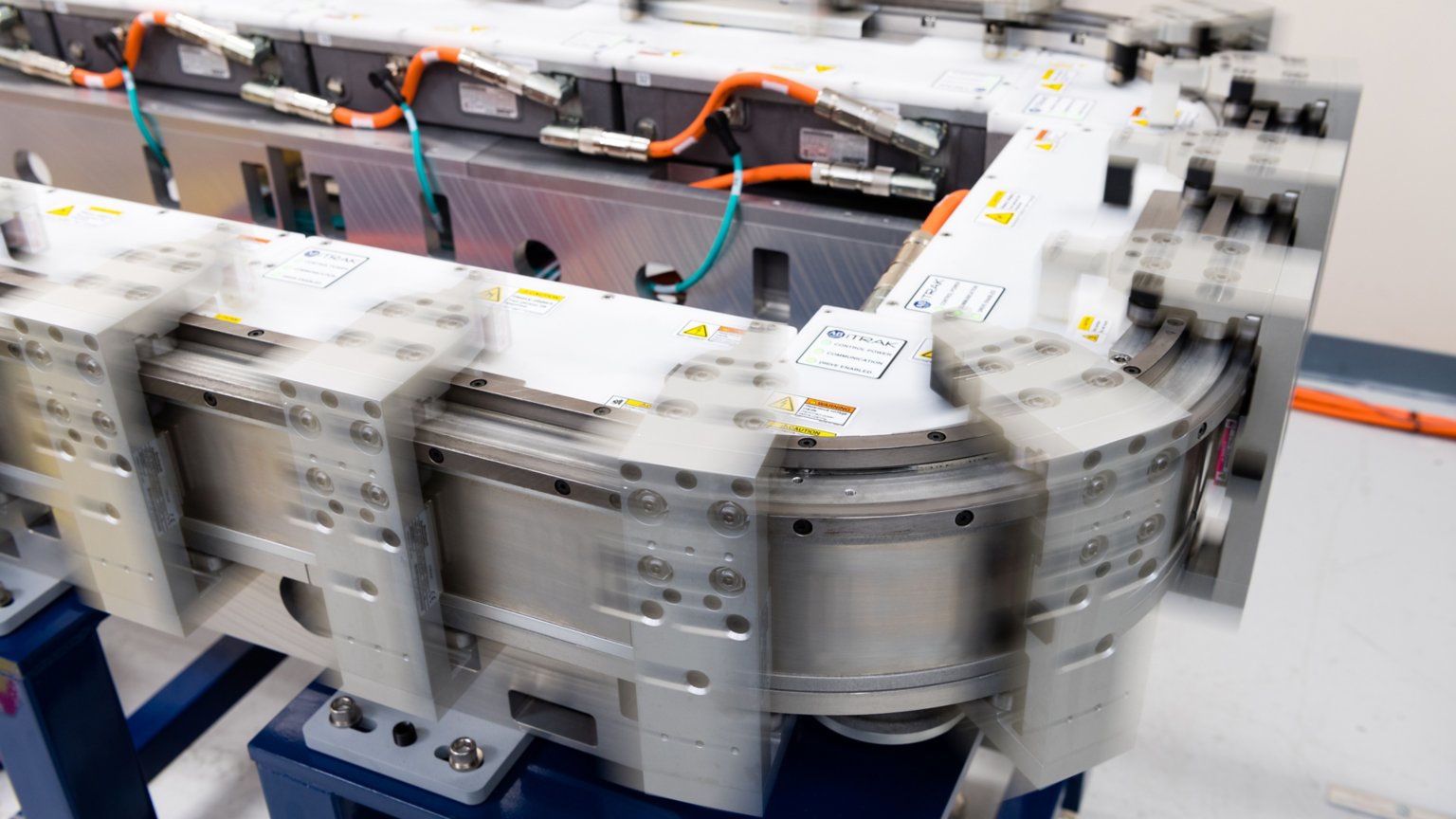
Tray moving a long a LSM track
Linear Synchronous Motor (LSM) Overview

LSMs generate propulsive force by running current through a stator, which creates an electro-magnetic field. This electro-magnetic field interacts with a set of permanent magnets on a vehicle to create thrust. The permanent magnets serve as the motor secondary, equivalent to a rotor in conventional motors enabling linear motion. The vehicle is propelled by the moving electro-magnetic field, traveling along as electric current is applied to the stator beneath the vehicle. The vehicle’s movement is regulated by a sophisticated control system incorporating state-of-the-art position sensing technology.

Linear Synchronous Motor Design, Applications, and Benefits

Linear Synchronous Motors (LSMs) can be used anywhere that you need linear motion or actuation. Factory automation applications using chain- and belt-based conveyor systems, hydraulic actuators, and lead screw drives are a few examples where LSMs could produce the required action, serving as an alternative to these mechanically dependent devices. Advantages include the following:

  • Increase reliability
    • Fewer components subject to wear
    • Acceleration and braking not dependent on friction
  • Improve performance
    • Increased speed, acceleration, efficiency
    • Provide more precise position control
  • Negotiate steep grades without depending on friction
    • Any slope is possible, including vertical
  • Eliminate the need to have propulsion power and control on the vehicle
    • Vehicle can be passive
  • Ability to control multiple vehicles on complex trajectories
    • No need to transfer communication or control signals to a moving vehicle

Major improvements in LSM technology over the last decade have made electro-magnetic propulsion a more viable solution for manufacturing and transportation industries. LSMs now use better and less expensive power electronic components and faster and more versatile digital signal processors with motor control features. Our motor configurations have been optimized using more advanced research and design tools. LSMs are well suited to many types of industrial applications. Permanent magnets (specifically NdFeB magnets) have also become less expensive, and have a higher electro-magnetic energy product.

Linear Synchronous Motor Performance

LSM systems can be designed and implemented to deliver a wide range of performance. High-thrust systems like those developed for maglev trains can reach speeds up to 166 m/s (360 mph). Lifting force generated by heavy industrial LSM elevator systems can lift up to 3.1 meganewtons (700,000lbs-force), the force needed to lift an elevator platform and fighter jet on an aircraft carrier. Positioning accuracy can reach better than one micrometer, as required in the semiconductor industry. Power generated for maglev systems can reach up to 40 MW.

As demands have increased in the manufacturing industries for higher speeds and more precise factory automation control, developments in LSM technology at MagneMotion have kept pace. Replacing an outdated conventional conveyor system with LSM propulsion can greatly increase throughput and decrease downtime and energy usage, in turn reducing the overall costs of operation and production. MagneMotion’s LSM designs focus on scalable modular solutions tailored to individual applications, to accommodate industrial equipment design and a wide range of manufacturing processes. Accurate control, logic, power electronics, position sensing, and communication are integrated in the LSM modules, creating a simpler system that reduces the need for third-party products, simplifying the systems integration effort. The control system is developed to provide a high degree of flexibility in system operation so thrust, positioning, and traffic management remain almost unchanged when the LSM-based design is scaled up or down. Please see our control systems page for more information.

Benefits of LSM Technology for Specific Applications and

Factory automation, packaging, and material handling

  • Manufacturing facilities, product assembly, cleanrooms, distribution centers, hazardous materials processing and transport
    • Faster and more efficient process automation
    • Lower maintenance
    • Motors can be mounted outside a glove box or enclosure
    • Lower energy requirements
    • Fewer moving parts
    • Reduced IO (Input/Output)

Elevator Applications

  • Passenger elevators for tall buildings, Military elevators for weapons and aircraft
    • Lighter than conventional elevators and use less space (smaller footprint)
    • Multiple cabs in a single shaft
    • Potential for one-way travel: up one hoistway and down another one
    • Higher speed and fewer hoistways for a given performance

Heavy Industrial LSM Solutions

  • Mining diagonal and vertical solutions
    • Lift for deep vertical mine shaft or for hauling ore up a steep slope
    • Eliminates the need for cables and counterweights
    • No height limit due to cable weight
    • Can be much faster than cable-hoist elevators
    • Cost effective and much higher capacity process
  • Replace hydraulic actuators in industrial equipment
    • No fluid leaks or hydraulic assembly reliability problems
    • No need for hydraulic pressure control systems
  • Swing motor for large shovels and drag line machines
    • Replace several large motors driving a bull-ring gear
    • Higher reliability, higher speed, better control

Transportation Applications

  • Vehicle propulsion
    • Propel wheeled and maglev vehicles
    • Acceleration and braking not dependent on friction
    • Control system entirely on guideway; no communication of critical information required by the vehicle
    • Can tailor peak force to vehicle needs
    • Allows use of small vehicles with short headway; decreased waiting time
  • Can assist conventional locomotives on steep grades
  • Maglev propulsion
    • Electro-magnetic suspension, guidance, and propulsion with single magnetic structure
    • More effective, efficient electro-magnetic suspension

Military/Navy Applications

  • Shipboard elevators
    • Substantial weight savings and reduced maintenance as compared with existing hydraulic and cable-drawn mechanisms
    • Replace hydraulics in same sized space
    • Actuators on submarines and surface ships
    • Higher reliability, lower maintenance due to more accurate control and elimination of wearing parts
  • Automated material handling
    • Both horizontal and vertical movement under automatic control
    • Systems for loading and unloading ships
    • Hazardous cargo handling
  • Aircraft and vehicle launch and arrest
    • Manned and unmanned aircraft
    • Torpedoes and countermeasures